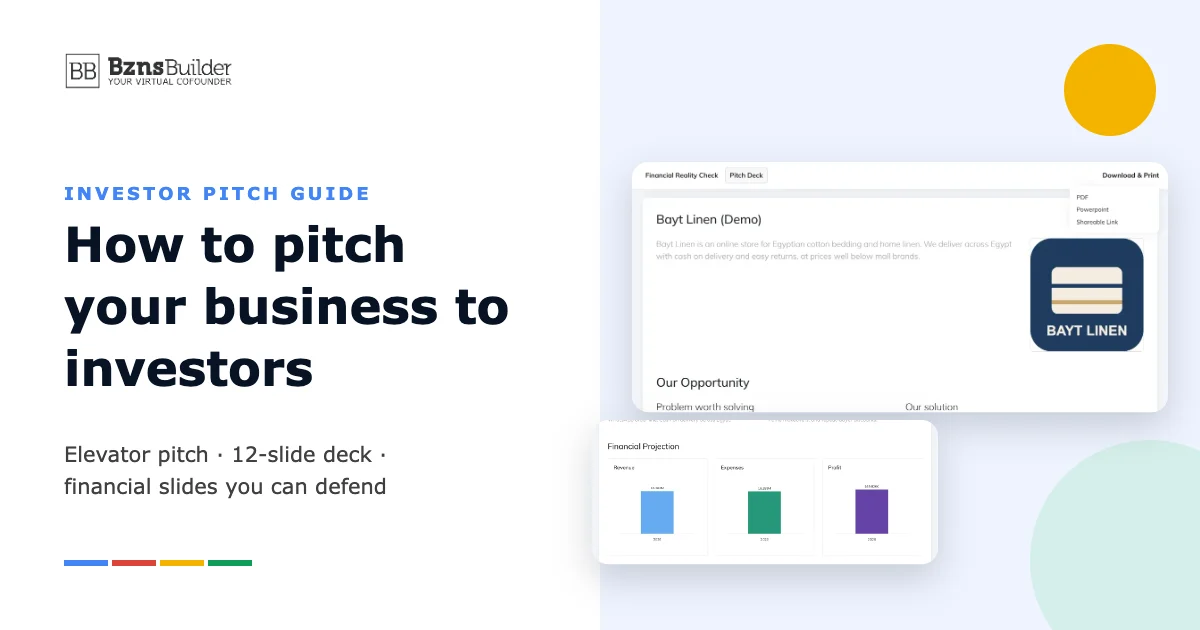
How to Pitch Your Business to Investors

To pitch your business to investors, tell one clear story in three layers: a 60-second elevator pitch that earns the meeting, a pitch deck of about 12 slides that explains the business, and financial numbers you can defend. Open with the problem and your traction, ask for a specific amount, and show exactly how it will be used and when it pays back.
Key takeaways
- Investors decide on a few questions: how big, why you, how you’ll grow, how much, and what if it goes wrong.
- The financial slides are where most pitches lose credibility. Every number should come from a forecast you can explain.
- Prepare a downside scenario before the meeting. “What if sales are 30% lower?” is the question you’ll hear most.
What investors want to know
| Their question | What answers it | Where in the deck |
|---|---|---|
| Is the problem real and big? | Who has it, how often, what it costs them; market size you can explain | Problem, market |
| Why you? | Your experience, an unfair advantage, early customers | Team, traction |
| How will you grow? | Channels, cost to win a customer, the first milestones | Go-to-market |
| How much, and for what? | A specific amount and a use-of-funds breakdown | The ask |
| What if it goes wrong? | A downside scenario and what you’d change | Financials, appendix |
Start with a 60-second elevator pitch
Your elevator pitch earns the meeting; the deck wins it. Say who you help, the problem, your solution, one proof point, and ask for a meeting. For what to add at 5, 10 and 20 minutes, see how long your pitch should be.
The pitch deck, slide by slide
A pitch deck is a short presentation, usually 10 to 15 slides, that explains your business to investors and asks for funding. Most strong decks follow this order:
| # | Slide | What to show | Common mistake |
|---|---|---|---|
| 1 | Title | Name, one-line description, contact | A slogan instead of what you do |
| 2 | Problem | Who has it and what it costs them | A problem only you have |
| 3 | Solution | How you solve it; a screenshot or photo | A feature list |
| 4 | Market | Who buys and how many; how you calculated it | A huge number with no source |
| 5 | Business model | How you make money; price and margin | Leaving pricing out |
| 6 | Traction | Sales, customers, pilots, growth | Vanity metrics |
| 7 | Go-to-market | Channels, cost to win a customer, plan | “Social media” with no numbers |
| 8 | Competition | Alternatives and why customers pick you | “We have no competitors” |
| 9 | Team | Founders and why they fit | A long list of advisers |
| 10 | Financials | 3-year revenue, profit and cash; key assumptions | Numbers you can’t explain |
| 11 | The ask | Amount, use of funds, milestones | No specific amount |
| 12 | Closing | Summary and contact | Ending on questions with no recap |
Keep one idea per slide, use large type, and put detail in an appendix. Guy Kawasaki’s 10/20/30 rule (10 slides, 20 minutes, 30-point font) is a useful check.
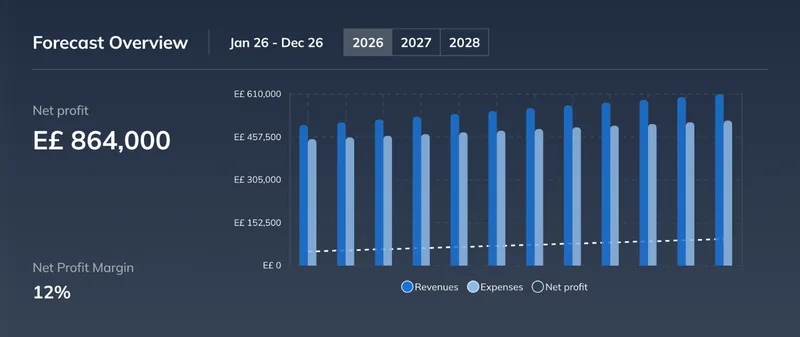
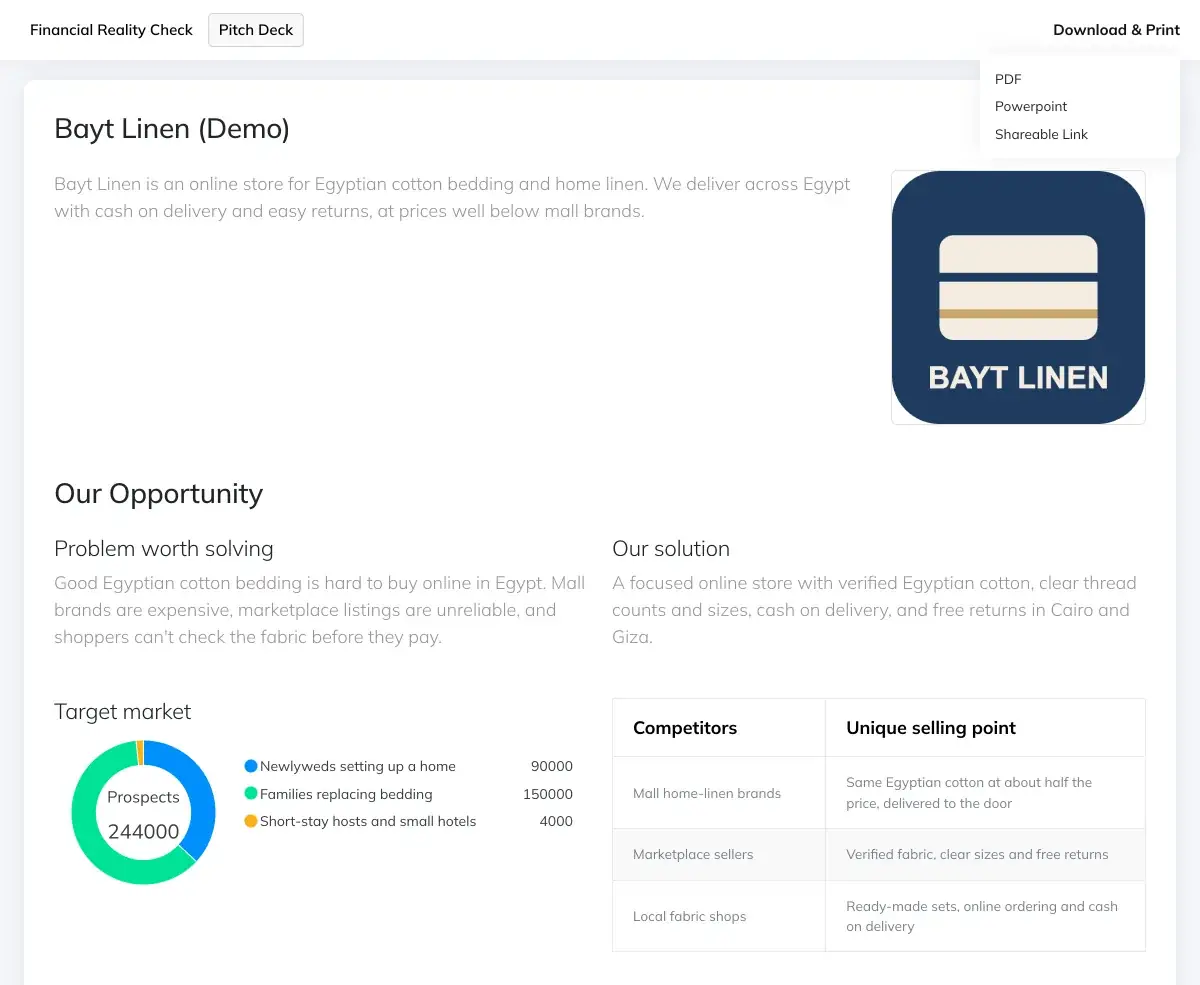
BznsBuilder’s Pitch Deck page lays out the sections investors expect. Click Edit on each one to write your problem, solution, market, competitors, funding and team, and the revenue, expense and profit charts come straight from your forecast. Export it as PowerPoint or PDF, or share a link, so your financial slide always matches the numbers you’ll defend.
The financial slides: revenue, profit, cash and the ask
Investors read the financial slides to judge whether you understand your own business. Show:
- A 3-year summary: revenue, gross profit, net profit and the cash balance at the end of each year.
- The drivers: the two or three assumptions behind the numbers, such as orders per month, average price and the cost to win a customer.
- The cash low point: the month cash is lowest and how the funding covers it.
- The ask and use of funds: the amount and what each part pays for.
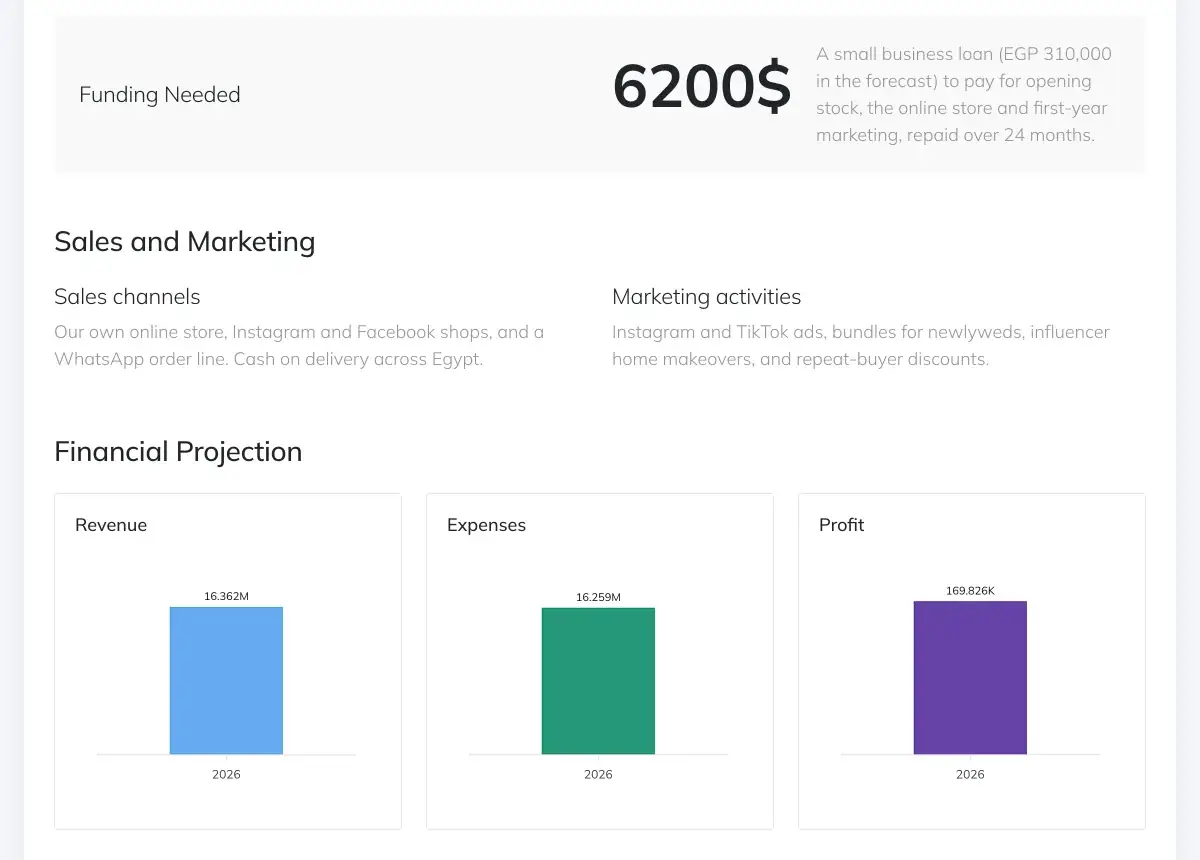
Example: the online store from our funding guide asks for $6,200: $3,000 of opening stock, $800 for the website and product photos, $700 of equipment, $600 for branding and launch, $400 storage deposit and a $700 cash reserve. On a slide, that becomes one simple bar or table next to the amount.
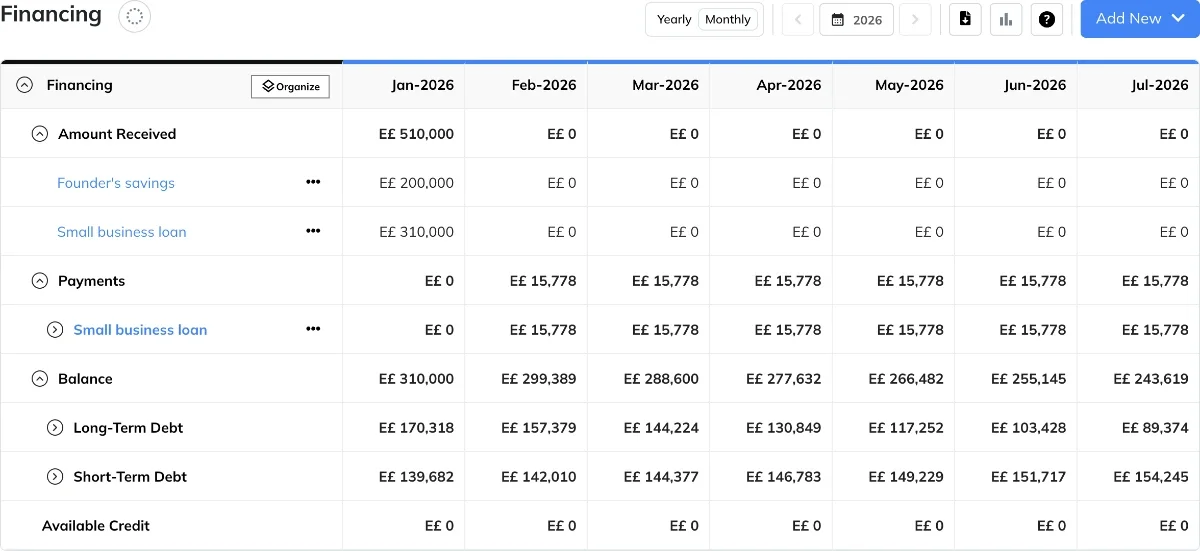
In BznsBuilder you enter your assumptions once and the financial forecast builds the profit and loss, balance sheet and cash flow for up to 10 years. Add the funding under Financing to see repayments or the investment in every statement, and download the reports as PDF or Excel for your deck.
The marketing slide
Investors want to know how you’ll win customers and what it costs. A strong marketing (go-to-market) slide answers four things:
- Who you sell to first: one clear customer group.
- Which channels: two or three that already show results, such as direct sales, partnerships or social ads.
- What a customer costs: marketing spend divided by new customers, compared with what a customer is worth.
- The plan for the money: how much of the funding goes to marketing and the milestone it should reach.
Put your marketing budget in the same forecast as everything else, so the slide and the financials match.
Pitching online
- Decide who speaks when. Agree in advance which founder answers which topic.
- Keep answers short. Online, long answers lose attention faster.
- Show the product. A 60-second live demo or a short recording works better than a slide.
- Test sound first. Use a headset or external microphone; poor audio hurts more than poor video.
- Check your connection and background. Use a wired connection if you can, and a plain, quiet room.
- Send the deck afterwards with your financial summary attached.
Answering investor questions
Prepare short answers to the questions you’ll hear in almost every meeting:
- What happens if sales are 30% lower than planned?
- When do you reach break-even?
- How long will the money last?
- Why now, and why you?
- What would you do with half the amount?
The first three are numbers questions. Answer them from your forecast, not from memory. See break-even and cash runway.
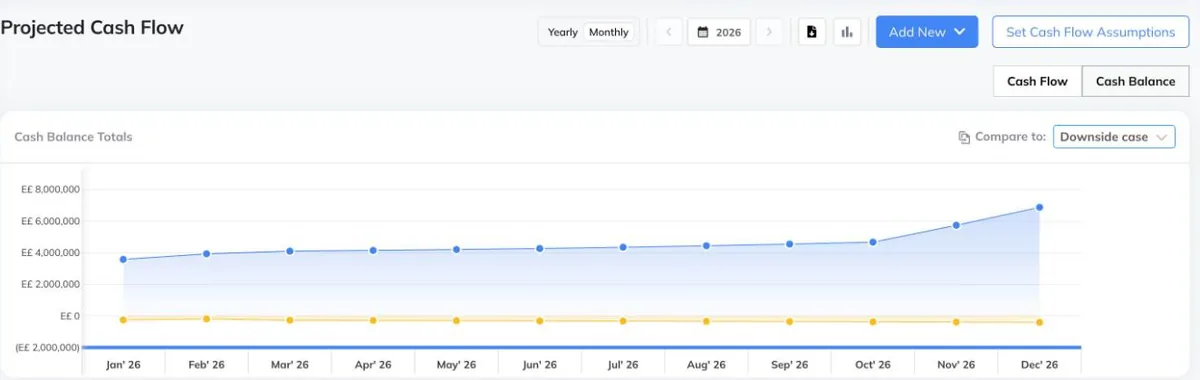
Build a what-if scenario in BznsBuilder with lower sales or a later launch, and compare the cash balance with your base plan. Launch includes 1 scenario, Build up to 3, Decide up to 10.
Pitch competitions and TV shows in MENA
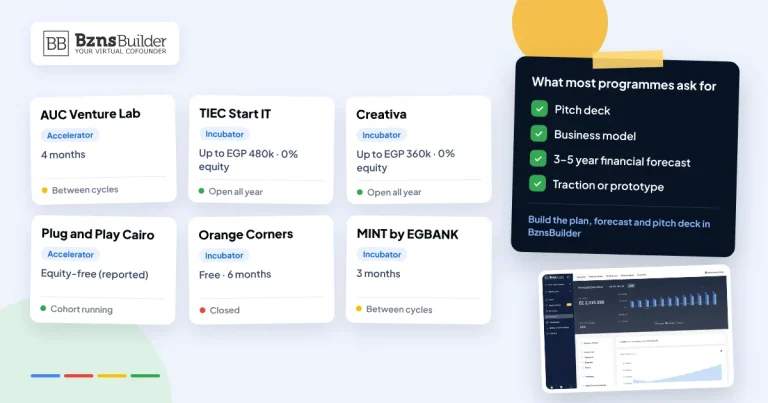
Accelerators, university competitions and TV shows give founders a stage and, sometimes, investment. They usually set a strict time limit and a fixed slide count, so prepare the 5-minute version of your pitch. If you’re in Egypt, read our guide to applying to Shark Tank Egypt. For programmes you can apply to, see startup incubators and accelerators in Egypt.
Common mistakes
- Asking for “investment” with no amount or use of funds.
- A market size with no explanation of how you calculated it.
- Financial projections that grow fast with no driver behind them.
- Too many slides, too much text.
- No answer ready for the downside question.
Frequently asked questions
How do you pitch a business to investors?
Lead with the problem and your traction, explain how you make money, show financials you can defend, and ask for a specific amount with a clear use of funds. Keep the first version to 60 seconds and the deck to about 12 slides.
How many slides should a pitch deck have?
Usually 10 to 15. The 12-slide order above covers what most investors expect.
What financials go in a pitch deck?
A 3-year summary of revenue, profit and cash, the key assumptions behind it, the month cash is lowest, and the amount you’re raising and what it pays for.
What is the difference between a pitch deck and a business plan?
A deck is a short presentation that gets the meeting and the conversation going; a business plan is the detailed document investors and banks read before deciding. See how to write a business plan.
How long should a pitch be?
From 30 seconds for an elevator pitch to 20 minutes or more for a full presentation. See pitch length by format.
How do I pitch to investors online?
Agree who speaks when, keep answers short, show a live demo, use a good microphone and a stable connection, and send the deck afterwards.
Can BznsBuilder make my pitch deck?
It gives you a strong starting point. On the Pitch Deck page you fill in each section (problem, solution, target market, competitors, funding needed, team), and BznsBuilder adds revenue, expense and profit charts from your forecast. Export it as PowerPoint or PDF, or share a link, then add your traction and your own design before you present.
Further reading: How to secure funding for a small business · How to write a business plan · How to forecast without historical data.
Show investors numbers they can trust
Build your three statements in minutes.
- P&L
- Cash flow
- Balance sheet