Financial Statements Explained: The 4 Statements and How They Link (One Example)

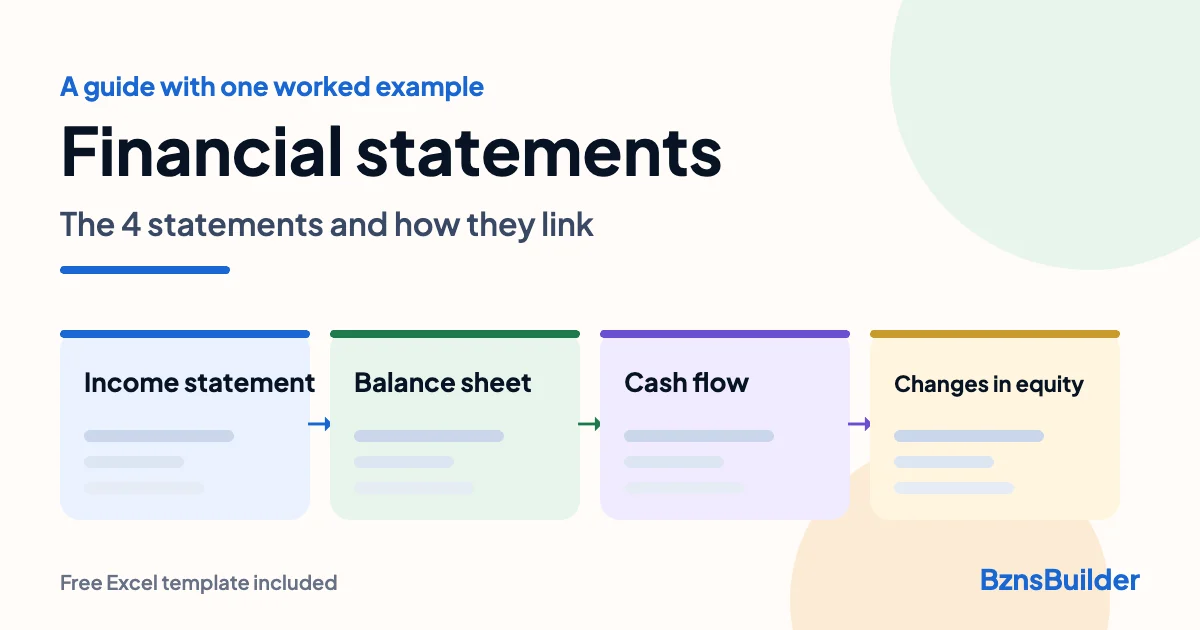
Financial statements are the four reports that show how a business performed and where it stands: the income statement (did you make a profit?), the balance sheet (what do you own and owe?), the cash flow statement (where did the cash go?) and the statement of changes in equity (how did the owner’s stake change?). They are linked: net profit from the income statement flows into the other three.
Key takeaways
- Four statements: income statement, balance sheet, cash flow statement and statement of changes in equity.
- Three cover a period; the balance sheet shows a single date.
- An income statement and a P&L (profit and loss statement) are the same report.
- In our example the shop earns $2,400 profit, but its cash rises only $1,200.
- Free Excel workbook with all four statements linked. No email needed.
What are financial statements?
Financial statements are the standard way to report a business’s numbers, so that owners, banks, investors and regulators read them the same way. Companies usually prepare them every year under accounting standards such as IFRS (or IFRS for SMEs). Owners often prepare monthly versions to manage the business, and projected versions for a business plan or funding request.
What are the 4 financial statements?
| Statement | Answers | Covers | Bottom line |
|---|---|---|---|
| Income statement (P&L) | Did we make a profit? | A period | Net profit or loss |
| Balance sheet (statement of financial position) | What do we own and owe? | One date | Assets = liabilities + equity |
| Cash flow statement | Where did cash come from and go? | A period | Change in cash |
| Statement of changes in equity | How did the owner’s stake change? | A period | Closing equity |
People often say “the 3 financial statements” because the statement of changes in equity is small for most small businesses and is sometimes folded into the balance sheet.
What is the difference between an income statement and a balance sheet?
| Income statement | Balance sheet | |
|---|---|---|
| Question | Did we make a profit this period? | What do we own and owe today? |
| Time | A period (month, year) | A single date |
| Main parts | Revenue, costs, expenses | Assets, liabilities, equity |
| Link | Net profit | Added to retained earnings |
Is a P&L the same as an income statement? Yes. “Profit and loss statement” is the everyday name; “income statement” is the formal one. Both end in net profit.
How are the three financial statements linked? One worked example
A small shop sells $18,000 in a year. Every number below is illustrative and ties across all four statements.
| Income statement (year) | Cash flow statement (year) | ||
|---|---|---|---|
| Revenue | 18,000 | Net profit | 2,400 |
| Cost of goods sold | (10,800) | + Depreciation | 400 |
| Operating expenses | (3,800) | − Receivables & inventory up, + payables up | (800) |
| Depreciation | (400) | Cash from operations | 2,000 |
| Tax (20%, illustrative) | (600) | Equipment bought | (1,200) |
| Net profit | 2,400 | Loan − owner drawings | 400 |
| Net change in cash | 1,200 |
Amounts in USD.
| Balance sheet | Start of year | End of year |
|---|---|---|
| Cash | 700 | 1,900 |
| Receivables | 1,000 | 1,600 |
| Inventory | 1,500 | 2,000 |
| Equipment (net) | 2,000 | 2,800 |
| Total assets | 5,200 | 8,300 |
| Payables | 800 | 1,100 |
| Loan | 0 | 800 |
| Owner’s capital | 3,000 | 3,000 |
| Retained earnings | 1,400 | 3,400 |
| Total liabilities + equity | 5,200 | 8,300 |
- Net profit → retained earnings: 1,400 + 2,400 − 400 drawings = 3,400.
- Depreciation → equipment: 2,000 + 1,200 bought − 400 = 2,800.
- Cash flow → cash: 700 + 1,200 = 1,900 on the balance sheet.
That is why profit is not cash: the shop earned $2,400 but tied $1,100 up in receivables and stock and bought equipment. Read more in Profit vs cash flow: why sales are up but cash is going down.
What is the statement of changes in equity?
| Capital | Retained earnings | Total | |
|---|---|---|---|
| Opening balance | 3,000 | 1,400 | 4,400 |
| + Net profit | — | 2,400 | 2,400 |
| − Owner drawings | — | (400) | (400) |
| Closing balance | 3,000 | 3,400 | 6,400 |
How to analyze financial statements: 5 quick ratios
| Ratio | Formula | Example | What it tells you |
|---|---|---|---|
| Gross margin | Gross profit ÷ revenue | 40% | Pricing power |
| Net margin | Net profit ÷ revenue | 13.3% | What you keep from each sale |
| Current ratio | Current assets ÷ current liabilities | 5.0 | Short-term safety |
| Debt to equity | Loans ÷ equity | 0.13 | Reliance on debt |
| Cash conversion | Cash from operations ÷ net profit | 0.83 | How much profit became cash |
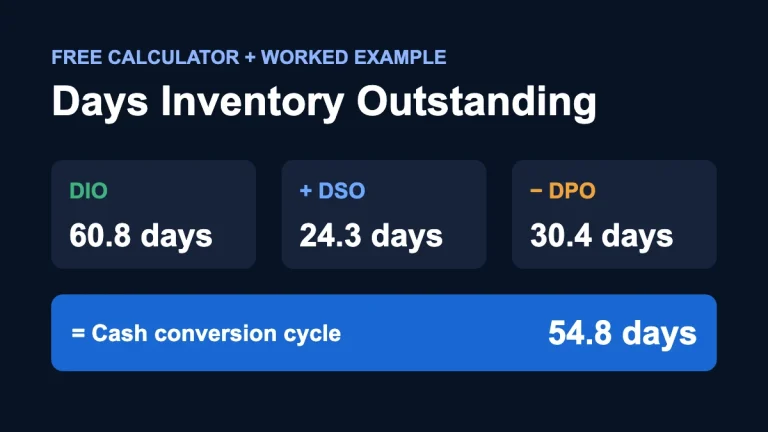
For stock-heavy businesses, also check days inventory outstanding and the cash conversion cycle, and use the break-even calculator to see the sales you need.
Actual vs projected financial statements
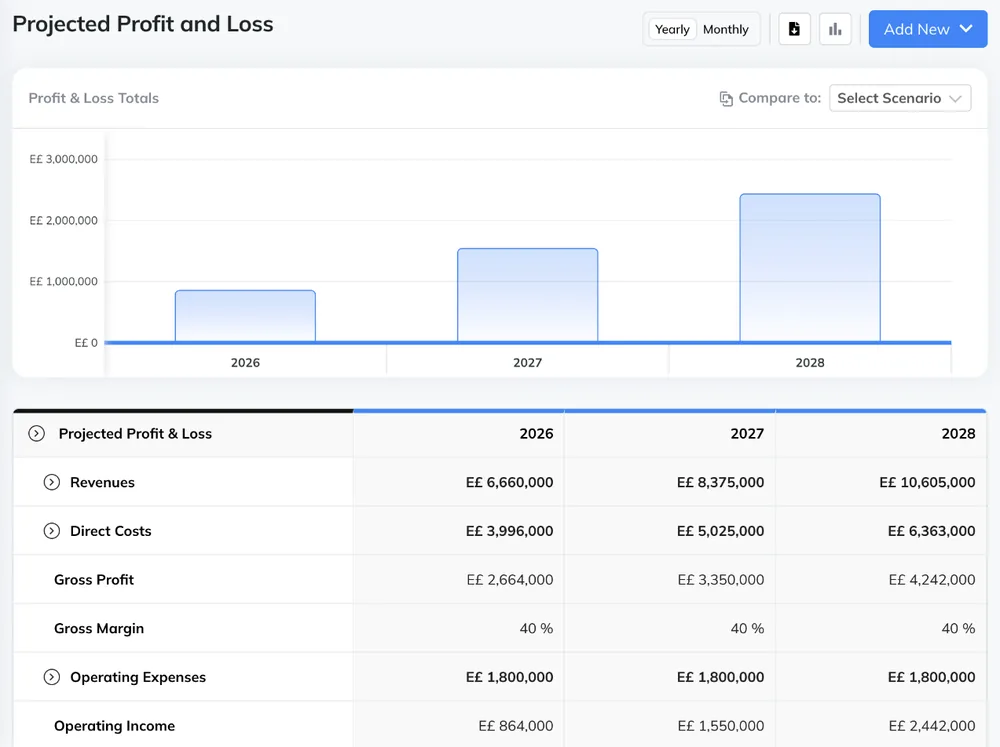
Actual statements come from your bookkeeping. Projected (pro forma) statements come from assumptions about sales, prices and costs, and they are the financial section of a business plan or a funding request. Build the cash side month by month with a 12-month cash flow forecast.
Free financial statements template (Excel)All four statements linked, with the worked example. No email needed.
Want projected statements for your own business? Try BznsBuilder free for 7 days (no credit card).
Financial statements FAQ
What are the 4 basic financial statements?
The income statement, the balance sheet (statement of financial position), the cash flow statement and the statement of changes in equity, plus the notes.
What is the difference between an income statement and a balance sheet?
The income statement measures profit over a period. The balance sheet shows assets, liabilities and equity on one date. Net profit links them through retained earnings.
Is a profit and loss statement the same as an income statement?
Yes. Profit and loss statement (P&L) and income statement are two names for the same report.
How are the three financial statements linked?
Net profit flows from the income statement into retained earnings and to the top of the cash flow statement. The cash flow statement’s closing cash equals cash on the balance sheet.
In what order are financial statements prepared?
Usually the income statement first, then the statement of changes in equity, then the balance sheet, then the cash flow statement, which uses figures from the others.
Is there a free financial statements template?
Yes. You can download a free Excel workbook from this page with all four statements linked and the worked example. No email is needed.
Projected financial statements, linked from the start
Enter your assumptions and get a balanced profit and loss, balance sheet and cash flow, with what-if scenarios.
- 3 linked statements
- Scenarios
- English & Arabic
About the numbers: All figures are illustrative, not market averages or tax advice. Sources: IAS 1, IAS 7 and IFRS 18 (IFRS Foundation); IFRS for SMEs, Sections 3–7.